How to Get Friends to Pay You Back Without the Drama
How to get friends to pay you back with real scripts for asking, plus how to track who owes you so it never becomes a guessing game.
There’s a specific kind of dread that sets in when you realize you’ve fronted money for the same friend three times in a row and none of it’s come back. Figuring out how to get friends to pay you back isn’t really a money problem — it’s an asking problem, and most people would rather eat the cost than have the conversation. That’s backwards. The conversation is easier than it feels, and skipping it is what actually damages friendships, not asking for what you’re owed.
The two things that make this work are timing your ask well and tracking the debt so it isn’t a fuzzy memory both of you can quietly disagree about.
Track It Before You Need To
The reason “who owes me money” turns into an argument is almost always that nobody wrote it down. You remember covering the Uber and the concert tickets; Your friend remembers Venmo-ing you “like, most of it” at some point. Neither of you is lying — memory for informal debts is just bad, and it gets worse the longer it sits.
The fix is boring but it works: log it when it happens. A note in your phone, a shared spreadsheet, or an app that tracks running balances. This matters more than it sounds like it should, because a specific number (“$34.50 from the dinner on the 12th”) is easy to bring up. A vague feeling (“you owe me for stuff”) is not — it sounds accusatory even when it isn’t, because there’s no anchor to point to.
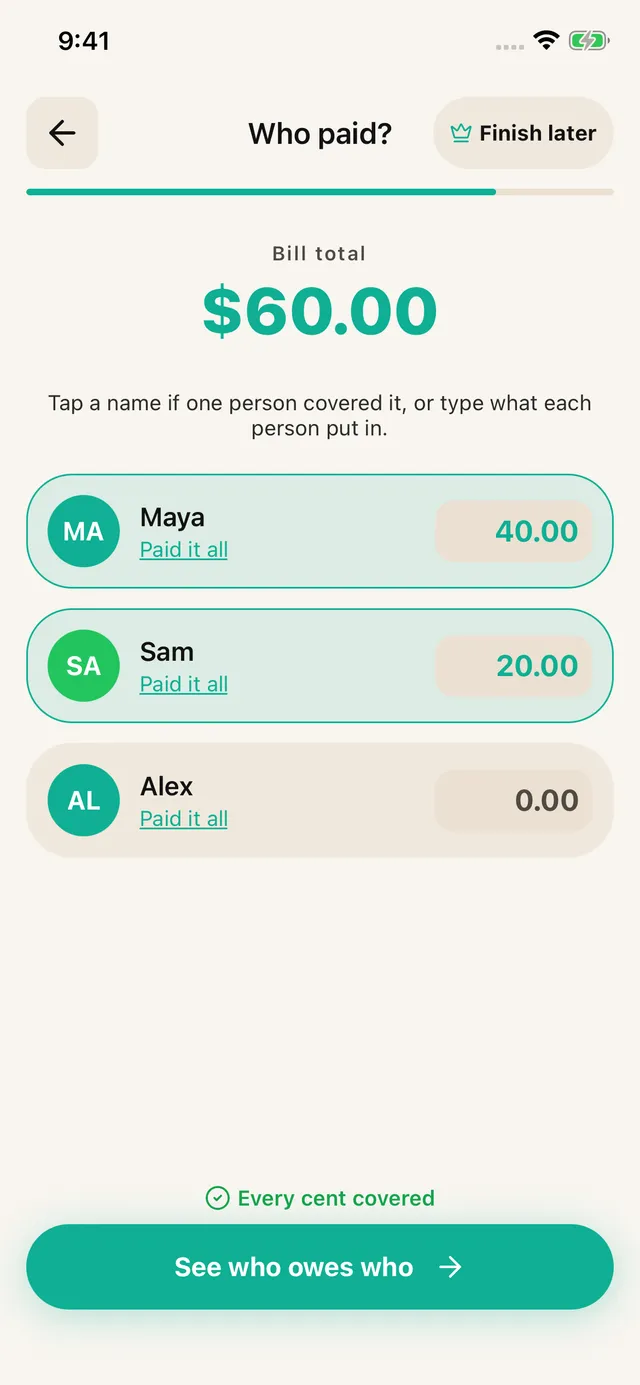
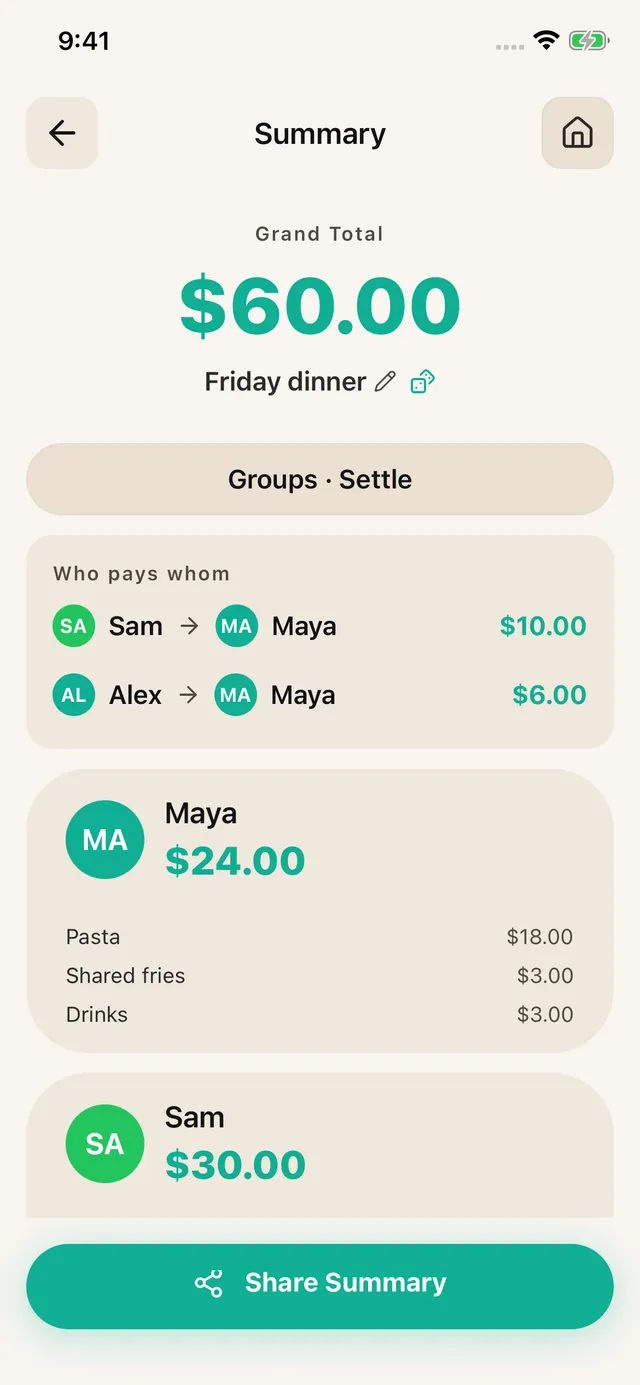
If you’re the one who fronts most group costs, do this at the moment you pay, not later. With SPLIIT you can scan the receipt as it hits the table and everyone’s share is logged before anyone leaves — free on iOS and Android, which removes the “I’ll figure it out tomorrow” step where debts usually go to die.
How to Get Friends to Pay You Back: Three Scripts, Word for Word
The gentle nudge (first ask, within a week or two): “Hey! Random one, but I think you still owe me $34.50 from the dinner last week — no rush, just wanted to flag it before I forget.”
This works because it’s framed as bookkeeping, not accusation. “Before I forget” gives your friend an easy out to just handle it without feeling called out.
The second reminder (two to three weeks later, still no payment): “Hey, following up on that $34.50 from the dinner — can you send it whenever’s convenient this week? Just trying to close out my running tab.”
Slightly more direct. “This week” adds a soft deadline without being aggressive. “Running tab” reframes it as routine, not personal.
The direct one (after multiple reminders, or a meaningful amount): “I want to bring this up directly because I don’t want it to sit between us — you still owe me $34.50 from a few weeks back. Can you send it today or this weekend? I don’t love chasing this down, so I wanted to just say it plainly.”
This one names the awkwardness instead of pretending it’s not there, which usually defuses it. Most people respond well to directness paired with an acknowledgment that it’s uncomfortable for you too.
One more thing about delivery: always ask privately, never in the group chat. A payment reminder in front of five other people reads as a public shaming even when you didn’t mean it that way, and it makes the other person defensive instead of apologetic. Text them directly, and keep the group out of it unless the debt actually belongs to the whole group.
When to Write It Off
Not every unpaid debt is worth pursuing to the end. If it’s under $15–20 and it’s a one-time thing, the honest math often favors letting it go — the friendship is worth more than the amount, and repeatedly chasing a small sum can cost you more socially than it’s worth financially. Write it off, mention it once lightly if it comes up naturally, and move on.
The calculation changes with amount and with pattern. A single unpaid $12 coffee is noise. A friend who’s now three-for-three on “forgetting” to pay you back, for amounts in the $30–100 range, is a pattern — and patterns are worth naming even if each individual instance felt too small to mention.
When the Pattern Means Stop Fronting
Here’s the part most advice skips: sometimes the answer isn’t a better script, it’s changing your own behavior. If a specific friend consistently doesn’t pay you back — not once, but as a habit — the fix isn’t a more perfectly worded reminder. It’s to stop covering them upfront. Split things in the moment (everyone orders and pays their own way, or you Venmo-request before you even leave the restaurant), or simply stop volunteering to be the one who fronts the group’s costs. You’re not obligated to keep extending informal credit to someone who’s shown you they won’t return it. That’s not petty — it’s just recognizing what’s actually happening instead of hoping the next reminder will be the one that works.
SPLIIT Pro: See eligible unpaid shares and record partial repayments. Group settlements stay in the group. Choose the shares, record each payer, then track what is still owed. A household or trip group keeps related expenses together; currencies stay separate. Share the breakdown with your friends and record repayments after the money arrives.
For the tools side of this, the best app to split bills without a subscription and Venmo groups vs. Dedicated bill-splitting apps both cover ways to make the tracking part automatic. And if the deeper issue is that your friend group has genuinely different budgets, not just different memories, splitting costs when friends earn different amounts is worth reading next.