Split a Receipt Discount That Applies to One Item
Apply an item-specific discount to that item’s owner before sharing the remaining charges.
Apply an item-specific discount to that item’s owner before sharing the remaining charges. A coupon on one meal is different from a discount on the entire order.
Check which lines qualify and whether the printed prices already include the discount. If a whole-order discount applies proportionally, use eligible subtotals as weights. Do not subtract a coupon again when the receipt’s final line prices already reflect it.
Worked example
A orders 30 units and B orders 20. A’s item receives a 6-unit discount. Final charge: 44; shares A 24 and B 20. Dividing the discount equally would produce 27 and 17, rewarding the wrong item.
| Allocation | Amount |
|---|---|
| A | 24.00 |
| B | 20.00 |
| Total | 44.00 |
Record the result
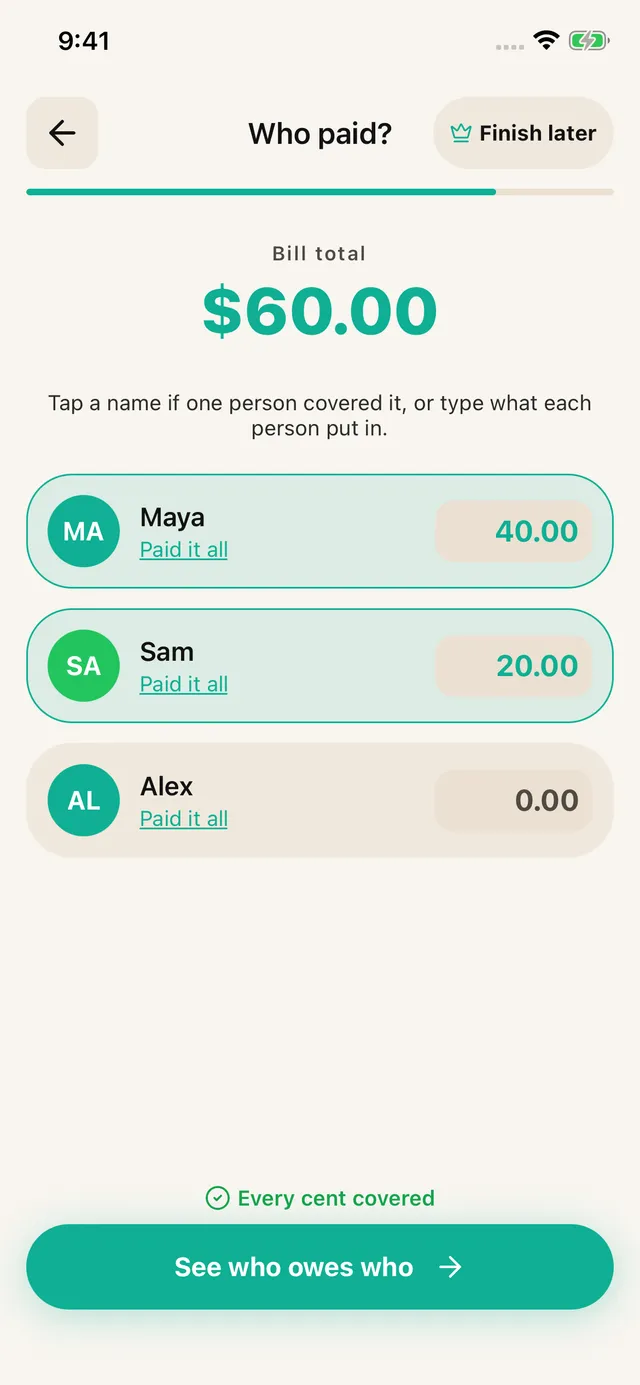
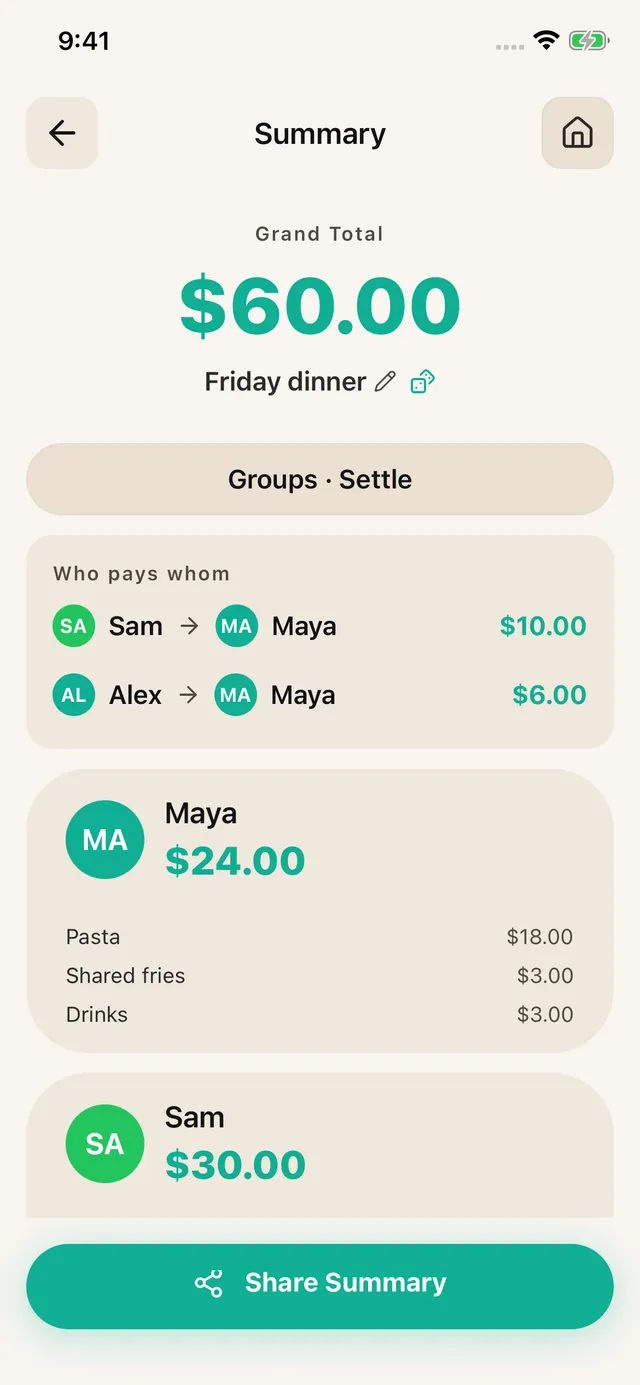
Agree the rule first, then enter the calculated amounts and actual payer in SPLIIT Pro. Assign each amount to the relevant people and review the total before sharing the breakdown. The private expense group keeps related bills and recorded partial repayments together. Friends can read shared breakdowns without installing the app; they do not edit your group. Transfer money through another method and record repayment only after it arrives.
These are illustrative units, not current prices. Use the actual bill, currency and agreement; the calculation is explained here, not promised as an automatic feature. Scanning needs a connection and review. The app is free to start with usage limits; Pro adds capacity and removes ads.
Frequently asked questions
Does every receipt coupon need a proportional split?
No. Follow the coupon’s scope: a named item benefits that item, while an eligible-order discount can be shared by eligible subtotals. Receipt wording determines which method applies; neither method should reduce the final charge twice.