Carry a Household Overpayment into the Next Bill
A previous overpayment can offset the next shared cost when both people agree.
A previous overpayment can offset the next shared cost when both people agree. Keep the original expense and the new payer record, rather than pretending a bank transfer happened.
Confirm the previous balance before using a credit. Add the next bill with its actual payer, and recalculate each person’s total paid minus total owed. Do not mark the old balance settled by cash when the agreement was to offset it against a later expense.
Worked example
First bill: 120 units, split equally; A paid 90 and B paid 30. B owes A 30. Next bill: 60, split equally, paid entirely by B. Across both bills each owes 90 and each has paid 90. The balance is zero without a transfer.
| Allocation | Amount |
|---|---|
| A | 90.00 |
| B | 90.00 |
| Total | 180.00 |
Record the result
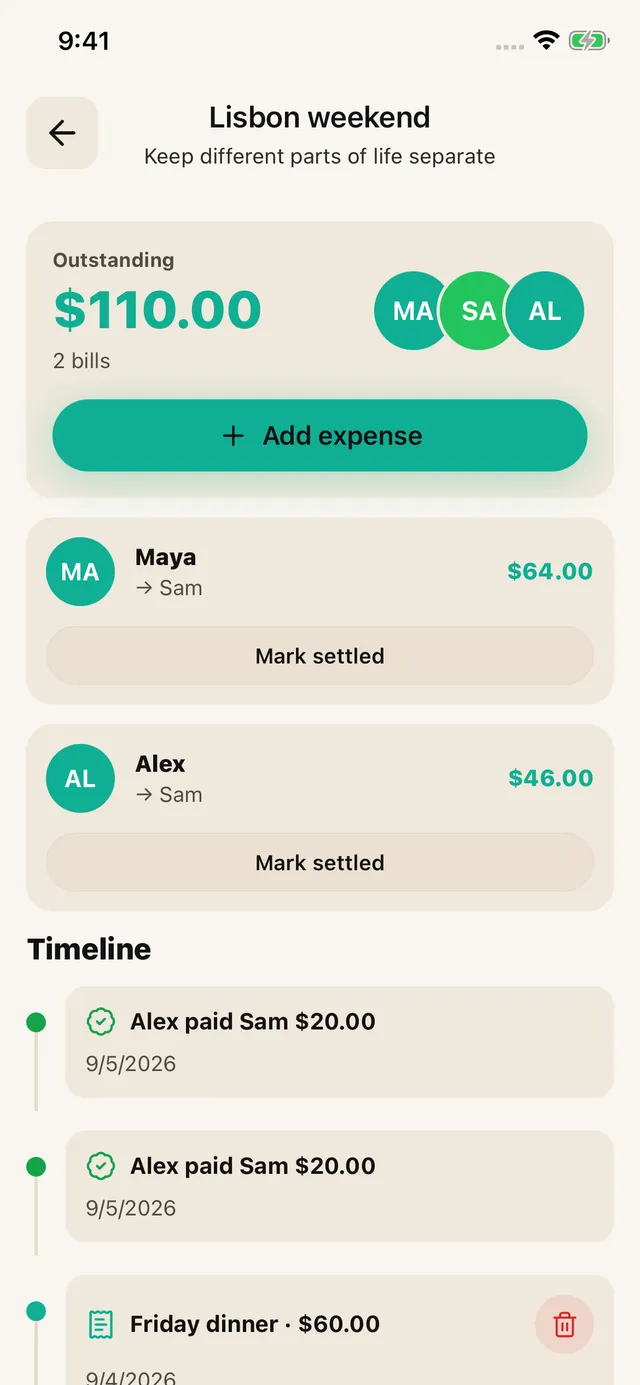
Agree the rule first, then enter the calculated amounts and actual payer in SPLIIT Pro. Assign each amount to the relevant people and review the total before sharing the breakdown. The private expense group keeps related bills and recorded partial repayments together. Friends can read shared breakdowns without installing the app; they do not edit your group. Transfer money through another method and record repayment only after it arrives.
These are illustrative units, not current prices. Use the actual bill, currency and agreement; the calculation is explained here, not promised as an automatic feature. Scanning needs a connection and review. The app is free to start with usage limits; Pro adds capacity and removes ads.
Frequently asked questions
Can I mark an offset as a cash repayment?
Use the actual expense and payer entries to reflect the offset. Recording a fictional repayment as well would count the same adjustment twice. If the next bill is smaller than the credit, retain the remaining balance.