The Best Way to Split Groceries With Roommates
How to split groceries with roommates using systems that actually last, with a worked $210 grocery run example for a vegan roommate who shops separately.
If you’re searching for how to split groceries with roommates, you’ve probably already tried the thing that doesn’t work: whoever shops pays, and everyone “settles up eventually.” Eventually rarely comes. The receipts pile up, memory gets fuzzy, and one roommate quietly starts to feel like they’re financing the fridge. Groceries are the shared expense that happens most often and gets tracked the least, which is exactly backwards.
Three systems for how to split groceries with roommates
Shared staples, separate everything else. Split the cost of cooking basics — oil, rice, spices, cleaning supplies — and everyone buys their own actual food. This is the system most households land on because it’s low-friction and doesn’t require anyone to negotiate over what counts as “fair” every week. The downside: you still end up with two bottles of ketchup in the fridge, and someone still has to decide what counts as a “staple.”
Rotating shopper. One person does the big shop each week or month, and the group settles up. Works well for households that eat similarly and are on a genuinely tight budget together, since buying in bulk saves real money. The downside: it only works if everyone actually eats what gets bought, and it falls apart fast the moment one person has a restrictive diet or just eats way more than everyone else.
Receipt-based splitting. Whoever shops logs the receipt, marks which items are shared versus personal, and the app or spreadsheet does the division. Most accurate system, especially useful in mixed-diet households, but only works if people actually log the receipt instead of letting it sit in their bag for two weeks.
The worked example: $210 with a vegan roommate
Three roommates do a joint Costco-and-grocery-store run totaling $210. One roommate, Dana, is vegan and buys her own protein and dairy alternatives separately, which came to $38 of that $210 — she paid for those items directly at checkout, so they never enter the shared pool.
That leaves $172 in genuinely shared items: pasta, produce, cleaning supplies, coffee, snacks. Split three ways, that’s $57.33 each. Dana’s actual total spend for the trip is $38 (her stuff) + $57.33 (shared) = $95.33. The other two roommates each owe $57.33.
Nobody pays for anyone else’s dietary choices, and nobody has to have an awkward conversation about whether Dana “should” contribute to a shared cheese purchase she’ll never eat. The trick is separating at checkout, or immediately after, rather than trying to unpick a combined receipt later.
Settling up: weekly beats monthly
However you split the cost, how often you settle matters almost as much as the split itself. Monthly settlement sounds cleaner but tends to produce one intimidating lump-sum request at the end of the month, right when rent is also due, which is exactly when nobody wants to see a $170 grocery bill land in their Venmo requests. Weekly settlement keeps the number small (usually $20-50 per person) and normal, which means nobody’s dreading the request and nobody’s tempted to “forget” a $170 ask the way they might a $20 one.
The households that keep grocery splitting drama-free almost always settle weekly, log the receipt the day of the trip, and treat the running balance as informational rather than a scoreboard. The ones that fight about groceries tend to be the ones that let three or four unlogged trips pile up until nobody can reconstruct who actually paid for what.
For tight budgets: the college angle
If money’s genuinely tight, shared staples plus a hard weekly cap works better than any elaborate system. Agree on a number ($15-25 a week per person for shared basics is common), buy only what fits inside it, and keep personal food spending completely separate so nobody feels judged for buying something the others can’t afford that week. This is also where tracking shared dorm and apartment costs as a student becomes worth setting up early, since grocery money is usually the first thing that gets squeezed when rent’s due.
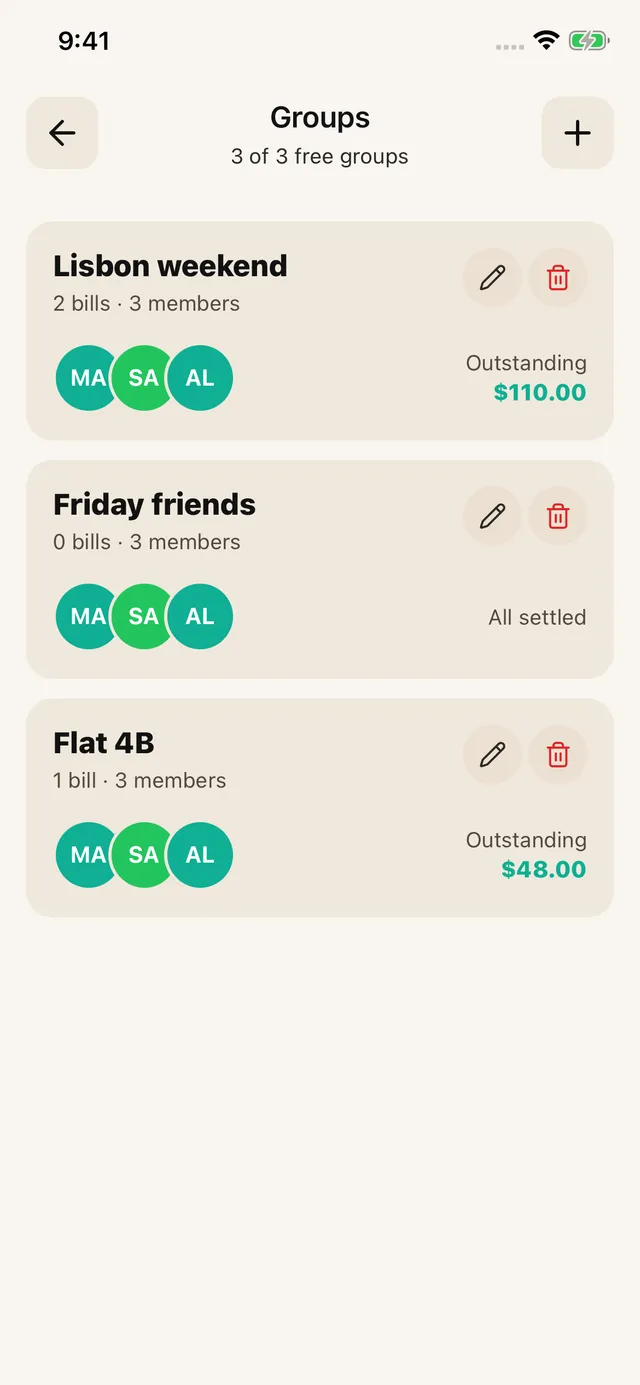
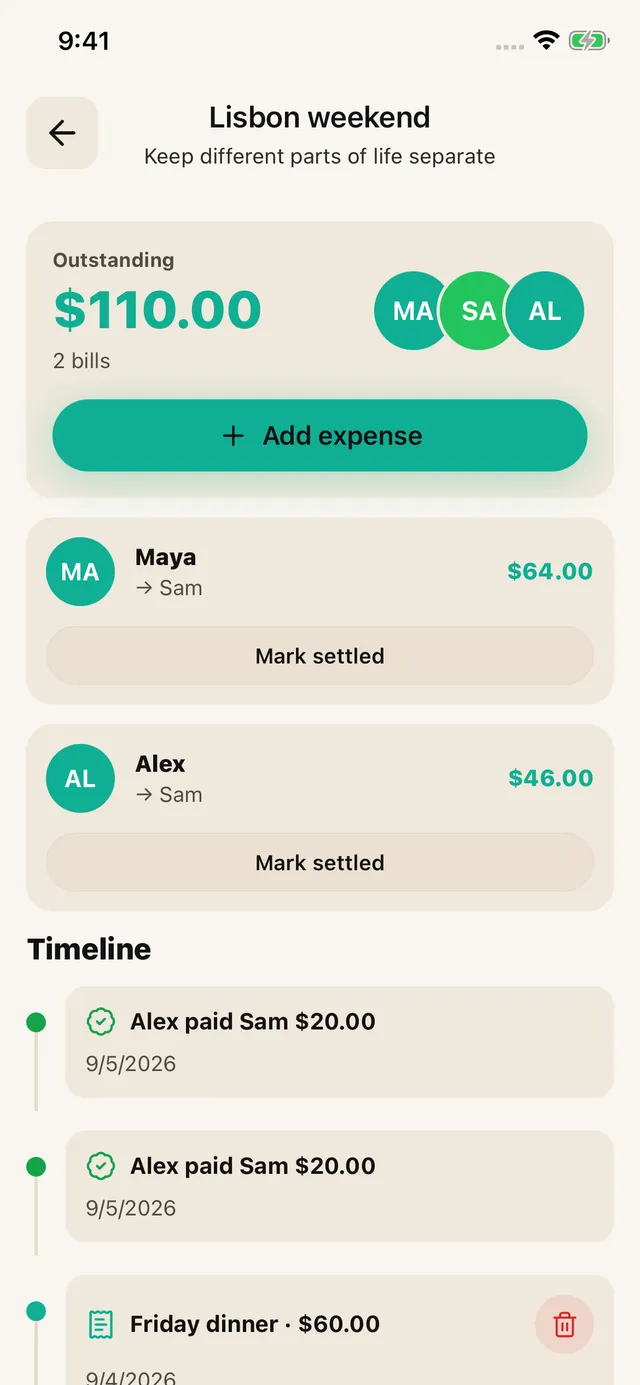
Whichever system you pick, the part that actually determines whether it survives past month one is logging. If you’re the one who ends up mentally tallying who bought what, SPLIIT does that part for you, scan the receipt and split it by item in under two minutes, the same way described in how an app that scans receipts and splits bills actually works. It’s free on iOS and Android.
Where grocery splitting breaks down anyway
Even a good system doesn’t fix a roommate who eats other people’s clearly-labeled food, or a guest who raids the shared shelf every weekend. That’s a boundaries conversation, not a math problem, and no app will have it for you. It also doesn’t fix a household where the underlying rent or utility split already feels unfair — that resentment tends to leak into every other shared cost, groceries included, so it’s worth reading how roommates can split rent and utilities without fights if grocery tension is really a symptom of a bigger imbalance.
SPLIIT Pro: Assign household items to the household and personal items to their owner. Keep home expenses together in a roommate group. Record a partial repayment in the group, or use Debts for eligible ungrouped bills you paid. Add each new bill yourself; Expenses are not created automatically.
Pick one system, write down what counts as shared, and log the receipt the same day you buy it. That’s the whole trick. Everything else is just deciding how much you care about two bottles of ketchup.